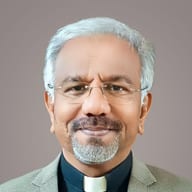
Following Jesus: A Call to Freedom Beyond Boundaries
Jesus called people to follow Him, and this call continued throughout His earthly ministry. Many heard His voice, yet they responded in different ways. Some immediately left everything - their work, possessions, and…
Jesus called people to follow Him, and this call continued throughout His earthly ministry. Many heard His voice, yet they responded in different ways. Some immediately left everything - their work, possessions, and even their old way of life - and followed Him wholeheartedly. Others expressed a desire to follow but asked for more time, placing conditions before their commitment. There were also those who followed Him for a while but later turned away when the path became difficult. Still others simply ignored His call. Those who truly followed Him became His disciples. Their lives were transformed by His teachings and His presence. Later, in Antioch, these disciples were first called Christians, because their lives reflected Christ.
Though this took place two thousand years ago, the question remains deeply relevant today: what does it truly mean to follow Jesus? His call was not an invitation to adopt a new religion, change one’s cultural identity, or merely observe external forms. To follow Him does not require converting from one religion to another, changing cultural practices, or adhering to rigid rituals, so-called sacraments, or newly imposed religious systems. Rather, His call is to a radically transformed life - a life moulded by His teachings, grounded in His love, and reflected in His example. It is an inward journey of faith and obedience, not a mere outward display of religion. To follow Jesus, therefore, is both simple and profoundly demanding: to live as He lived, to love as He loved, and to walk daily in His way with freedom and surrender. Every trace of ego, indulgence in luxury, and craving for prestige stands in direct contradiction to the spirit of Christ. This alone is the true and uncompromising essence of discipleship.
Corruption and the Misuse of Power
Corruption is one of the clearest and most destructive signs of a deeply disoriented society. It is not merely a social evil; it is a moral and spiritual collapse. Tragically, it has now infiltrated even the life of the Church, cutting across denominations and weakening its witness in the world. Time and again, we see how people change the moment power is placed in their hands. Authority, instead of being exercised as a sacred trust, is often misused for personal gain, control, and self-promotion. This transformation is both sudden and alarming. It reveals a dangerous forgetfulness: that all power entrusted through democratic processes - or even within ecclesial structures - is temporary, accountable, and profoundly demanding. It is never absolute.
Power and corruption walk hand in hand. When power is detached from integrity, humility, and the fear of God, it becomes an instrument of exploitation. In such a condition, evil finds easy access, and both power and corruption are readily manipulated for destructive purposes. Corrupt individuals gradually lose all reverence - neither fearing God nor respecting fellow human beings - because they place their confidence in wealth, influence, and position. Yet this is a tragic illusion. The history of individuals and nations alike reminds us that corruption carries within itself the seeds of its own downfall. Those who rely on dishonest gain and unjust power rarely endure; their influence fades, their legacy collapses, and their name becomes a caution rather than an honour.
Therefore, the call before us is urgent and uncompromising: to reclaim the moral and spiritual foundations of leadership. Power must be understood as stewardship, not possession; as service, not privilege. Only when authority is exercised with humility, accountability, and the fear of God can it become a force for justice, truth, and life.
Comment / Query / Suggestion / Doubt
Write your comment, question, suggestion or doubt about this article. It goes privately to Achan by email and is not published on the site.