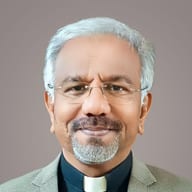
Revd. Dr. D. J. Ajith Kumar

Freed by Grace and Reformed faithfully

22 Sunday after Pentecost Reformation Sunday Introduction Reformation Sunday is not merely a historical remembrance; it is a spiritual call to return to the heart of the Gospel - salvation by grace through faith. The…

Key verse

“But the tax collector stood at a distance. He would not even look up to heaven, but beat his breast and said, ‘God, have mercy on me, a sinner.’” (Luke 18:13)

Readings

Deuteronomy 6:1–9; Psalm 119:41–48; Romans 1:8–17; Luke 18:9–14

22 Sunday after Pentecost

Reformation Sunday

Introduction

Reformation Sunday is not merely a historical remembrance; it is a spiritual call to return to the heart of the Gospel - salvation by grace through faith. The Protestant Reformation, initiated over 500 years ago, emphasized that we are justified not by works, but by faith in the finished work of Jesus Christ. This Sunday reminds us to continue reforming our lives and churches according to God’s Word. In a world chasing performance, appearances, and self-righteousness, we are reminded today that God’s grace frees us to live humbly, obediently, and faithfully. Our theme, “Freed by Grace and Reformed Faithfully,” is grounded in Scripture. The lectionary passages reveal how we are shaped by God’s commandments (Deuteronomy), nourished by His Word (Psalm), justified by faith (Romans), and humbled before His mercy (Luke). Let us now reflect on how each of these passages invites us into a deeper, more reformed relationship with God.
  1. Rooted in God’s Commands (Deut. 6:1-9)

The passage from Deuteronomy sets the foundation of reformation in the Old Testament: wholehearted devotion to God. Moses instructs the people to love the Lord with all their heart, soul, and strength. This call to covenantal fidelity isn’t a burden, but a gracious framework for living. Reformation begins with remembering. As Moses said, these commandments are to be upon your hearts, taught to your children, and tied as symbols on your hands and foreheads. God’s commands are not outdated laws but life-giving principles that guide faithful living. In a family where values are remembered, respected, and lived out daily, generations flourish. Likewise, a church or nation grounded in God’s Word will not be shaken. Just as Martin Luther nailed the 95 Theses to return the church to biblical truth, so must we daily return to God’s Word to reform our thoughts, desires, and actions. Faithful reformation starts by renewing our commitment to love and obey God above all else. His Word must not be an occasional reference but the compass that shapes our entire journey.
  1. Delighting in God’s Word (Psalm 119:41-48)

Psalm 119 is a psalm of deep longing and delight in God’s Word. The psalmist prays, “May your unfailing love come to me, Lord, your salvation, according to your promise” (v.41). The Word of God is not merely instruction but also promise, love, and hope. In an age of confusion and relativism, Scripture anchors us. We are reformed and constantly renewed as we engage Scripture not just intellectually but devotionally. The psalmist’s desire is to speak of God’s statutes before kings and not be ashamed. Imagine a lamp in the darkness. Even a small light can guide a traveller through the night. Similarly, God’s Word illumines our path, especially in seasons of spiritual darkness. Churches and individuals that delight in God’s Word shine with clarity in a world blurred by compromise. Faithful reformation involves delighting in God’s Word, meditating on it, and letting it transform our language, conduct, and perspective.
  1. Living by Faith, Not Performance (Romans 1:8-17)

Paul, in his opening words to the Romans, expresses thanksgiving, longing, and a bold declaration: “The righteous will live by faith” (v.17). This was the verse that pierced Martin Luther’s heart and became the theological spark of the Reformation. The righteousness of God is revealed not through our works but through faith. We are freed from the burden of self-justification and performance. In Christ, we are accepted not because of who we are or what we have done, but because of who He is and what He has done. A student who is constantly trying to earn a teacher’s approval may become anxious and fearful. But when the teacher affirms the student’s worth and encourages growth, the student thrives. Similarly, God’s grace does not excuse us from obedience, but empowers us to live joyfully and faithfully. Faithful reformation means refusing to measure our worth by works or others’ opinions but living by grace, with humble dependence on Christ.
  1. Humbled Before God (Luke 18:9–14)

The parable of the Pharisee and the tax collector is a piercing contrast between self-righteousness and genuine humility. The Pharisee boasts of his religious deeds, but the tax collector simply pleads, “God, have mercy on me, a sinner.” This story reminds us that spiritual pride is a greater danger than moral failure. Jesus upends religious assumptions by declaring the tax collector, not the Pharisee, justified before God. In a world where status and comparison rule, humility is countercultural. Reformation requires heart-surgery. It is not about changing rituals but transforming attitudes. True spiritual maturity lies not in how much we know or do, but how deeply we know our need for God. This Reformation Sunday, we must examine our own hearts. Are we relying on our own righteousness or falling on God’s mercy? The reformed life is a humbled life, ever aware of God’s grace and ever seeking to extend it to others.

Reformation Day: History, Message, and the Five Solas

Reformation Day, observed on October 31st, marks one of the most transformative events in the history of the Church. On this day in 1517, Martin Luther, a German Augustinian monk and professor of theology, nailed his Ninety-Five Theses to the door of the Castle Church in Wittenberg, Germany. His document raised profound concerns about the Church’s practice of selling indulgences and questioned the authority of the Pope in forgiving sins. Luther’s bold action sparked what we now call the Protestant Reformation, a movement that brought sweeping changes to theology, worship, and the very structure of the Church. Luther’s deep concern was rooted in his study of Romans 1:17, which declares, “The righteous shall live by faith.” This verse became the heartbeat of the Reformation. It revealed to Luther the liberating truth that salvation is not earned by good works or religious rituals, but is a gift of grace received through faith in Jesus Christ. This message was not a novel invention, but a recovery of the Gospel as proclaimed by the early Church and found in Scripture. The Reformation was not merely a protest - it was a profound rediscovery of biblical truth. From this movement emerged the foundational convictions known as the Five Solas (Latin for “alone” or “only”). These five principles capture the theological essence of the Reformation and continue to shape Protestant theology today.

Sola Scriptura - Scripture Alone

This affirms that the Bible is the supreme authority in all matters of faith and practice. While church traditions and teachings may be valuable, they must always be subordinate to the Word of God. Scripture is inspired, sufficient, and the final arbiter of truth.

Sola Fide - Faith Alone

Justification before God comes by faith alone, not by human effort, religious rituals, or moral merit. Faith is trusting wholly in the finished work of Christ, not in our own righteousness.

Sola Gratia - Grace Alone

Salvation is entirely a gift of God’s grace, not something we deserve or earn. It is God’s unmerited favour poured out through Christ, offered to sinners out of divine love and mercy.

Solus Christus - Christ Alone

Jesus Christ is the only mediator between God and humanity. Our salvation is accomplished through His life, death, and resurrection. No priest, saint, or church structure can replace the centrality of Christ in redemption.

Soli Deo Gloria - To God Alone Be the Glory

All of life and salvation is for God’s glory alone. The Reformation taught that worship, vocation, and salvation are to exalt God - not human achievement, religious leaders, or institutions. Together, these truths brought the Church back to the Gospel’s foundation. The message “The righteous shall live by faith” continues to speak to all generations, especially in a world seeking hope and peace. On Reformation Day, we are called to remember that we are freed by grace and must be reformed faithfully - returning always to the Word of God and the life-transforming power of the Gospel.

Conclusion

To be “Freed by Grace and Reformed Faithfully” means to live in daily awareness of God’s mercy, grounded in His Word, shaped by faith, and marked by humility. Reformation is not a moment of change but a lifelong movement of returning to the Gospel. In a world prone to pride, performance, and distraction, we are called to be people who:
  • Obey God from the heart (Deuteronomy)

  • Delight in His Word (Psalm)

  • Live by faith, not by works (Romans)

  • Walk humbly before God (Luke)

Let us allow the Spirit of God to reform us anew, to rekindle our love for His truth, and to free us to live joyfully in His grace. As we commemorate the Reformation, may we be reformers in our time, witnesses of the liberating Gospel of Christ. As we commemorate Reformation Day, we must not confine the Reformation to the pages of history. The Church today stands in urgent need of a Neo-Reformation - a fresh movement of the Spirit that calls us back to the heart of the Gospel. In an age of compromise, consumerism, and cultural conformity, the Church must once again be shaped by the truth of Scripture, grounded in grace, and centred in Christ alone. We need a deep spiritual awakening that rekindles authentic faith, fuels holy living, and restores passion for mission. This new Reformation must begin not in institutions, but in the hearts of believers who are willing to repent, be renewed, and boldly proclaim, “The righteous shall live by faith.” Let us rise as a Church that is not conformed to this world but transformed by the renewing of our minds—so that God alone is glorified, His truth is upheld, and His kingdom is advanced with courage, conviction, and compassion.

Prayer

Gracious and Almighty God, We thank You for the gift of grace that sets us free and reforms us daily. As we remember the Reformation, renew in us a deep love for Your Word and a humble heart that seeks Your will above all. Help us to live not in pride or performance but in faith, gratitude, and obedience. Reform our churches, our homes, and our lives that we may reflect Your truth and mercy in a divided world. Make us bold to speak the Gospel, patient to endure trials, and joyful in our journey with You. To You be all glory and honour, now and forevermore. In Jesus’ name we pray, Amen.
← Sermons Download PDF Share