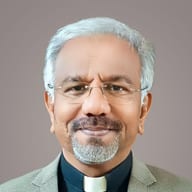
Revd. Dr. D. J. Ajith Kumar

Eccl.4.9-12

Marriage is o ne of God’s most beautiful and sacred gifts to humanity. From the very beginning of creation, God declared that “it is not good for the human being to be alone” (Genesis 2:18). In response, God created…

Key verse

“So they are no longer two, but one flesh. Therefore what God has joined together, let no one separate.” (Matt. 19:6)

Readings

Psalm 128

Marriage is one of God’s most beautiful and sacred gifts to humanity. From the very beginning of creation, God declared that “it is not good for the human being to be alone” (Genesis 2:18). In response, God created companionship, covenant, and community in the form of marriage. Therefore, marriage is not merely a social arrangement, a cultural practice, or a legal contract; it is a divine covenant established by God for love, unity, companionship, and mutual responsibility.Yet in today’s world, the meaning of marriage is increasingly misunderstood. In many places, marriage is seen only in terms of personal happiness, emotional satisfaction, or temporary convenience. When difficulties arise, relationships are easily broken. The biblical vision of marriage, however, is far deeper. It is rooted in covenant faithfulness, sacrificial love, spiritual unity, and lifelong partnership.The Scriptures appointed for this Sunday present marriage as a divine mystery and a sacred partnership. Ecclesiastes speaks of the strength found in companionship. The Psalm celebrates the blessings of a godly home. Paul describes marriage as a reflection of Christ’s love for the Church. And Jesus affirms the sacred unity of husband and wife as ordained by God Himself.In this sermon, we reflect on four dimensions of marriage as a celebration of unity and partnership.
  1. Marriage is a Covenant of Companionship and Strength(Eccl. 4:9–12)

The book of Ecclesiastes presents a simple but profound truth:“Two are better than one, because they have a good reward for their toil.”The writer emphasizes the strength that comes from companionship. Life is not meant to be lived in isolation. Human beings are created for relationship, and marriage is one of the most intimate expressions of that relational design.The passage highlights practical realities of life. When one falls, the other lifts up. When one is weak, the other provides strength. When one is cold, the other offers warmth. When one is attacked, the other stands in defence. This is not only poetic language; it is a realistic description of life’s challenges.Marriage, therefore, is a partnership of mutual support. It is a relationship in which two individuals become stronger together than they could ever be alone. It is a covenant in which spouses share joys, burdens, successes, and struggles.In Christian marriage, companionship is not based merely on emotion but on commitment. Feelings may change over time, but covenant love endures. This is why marriage requires intentional care, patience, forgiveness, and perseverance.Ecclesiastes reminds us that a “threefold cord is not quickly broken.” In Christian understanding, this threefold cord is often interpreted as husband, wife, and God at the centre. When God is the foundation of marriage, the relationship gains strength that can withstand trials and challenges.Thus, marriage is not only about two people living together; it is about two lives being woven together by God into a bond of strength and unity.
  1. Marriage is a Blessing that Flows from Faithfulness to God(Psalm 128)

Psalm 128 paints a beautiful picture of a godly household:“Blessed are all who fear the Lord, who walk in his ways.”The psalm links marital and family blessings directly to reverence for God. It describes a home where the husband enjoys the fruit of his labor, the wife is fruitful like a vine, and children surround the table like olive shoots.This imagery reflects harmony, peace, stability, and joy within the family. However, the foundation of this blessing is not human effort alone but a life rooted in the fear of the Lord.In biblical thought, “fear of the Lord” means reverence, respect, and obedience to God. When a marriage is grounded in faith, it becomes a channel of blessing not only for the couple but for future generations.A godly marriage creates a stable environment where children are nurtured in love, where values are transmitted, and where faith is lived out in daily life. Families become small sanctuaries where God’s presence is experienced.Psalm 128 also reminds us that marriage is not only private but also communal. It has implications for the wider society. Strong families build strong communities. Faithful marriages contribute to social stability, moral strength, and spiritual vitality.In a world where many families experience fragmentation, stress, and broken relationships, the Church is called to uphold and nurture the vision of a God-centred home.Marriage becomes a blessing when God is at the centre, guiding decisions, shaping relationships, and nurturing love.

III. Marriage is a Reflection of Christ’s Love for the Church(Eph. 5:21–33)

The Apostle Paul presents one of the most profound theological visions of marriage in the New Testament. He compares the relationship between husband and wife to the relationship between Christ and the Church.“Husbands, love your wives, just as Christ loved the Church and gave himself up for her.”This is a revolutionary teaching. It transforms marriage from a social contract into a spiritual mystery. Christ’s love for the Church is sacrificial, self-giving, and unconditional. It is a love that serves, protects, nurtures, and redeems.In this light, the husband is called to love with sacrificial responsibility, and the wife is called to respond with respect and partnership. However, the deeper message is mutual submission “out of reverence for Christ.”This means that Christian marriage is not about domination or superiority but about mutual love and service. It is a relationship where both partners seek the good of the other.Paul’s teaching also reveals that marriage has a spiritual dimension. It reflects something greater than itself. It becomes a living symbol of God’s covenant love with His people.Just as Christ remains faithful to the Church, so spouses are called to remain faithful to one another. Just as Christ gives Himself for the Church, so spouses are called to give themselves in love and service.This vision elevates marriage to a sacred calling. It is not merely about compatibility or convenience but about embodying the Gospel in daily life.When Christian couples live out this calling, their marriage becomes a testimony to the world of God’s faithful love.
  1. Marriage is a Sacred Union Ordained by God(Matt. 19:4–6)

In the Gospel reading, Jesus responds to questions about divorce by returning to the original intention of creation:“Have you not read that the one who made them at the beginning made them male and female?”Jesus grounds marriage in creation itself. It is not a human invention but a divine ordinance. He then declares:“What God has joined together, let no one separate.”This statement affirms the sacredness and permanence of marriage. It is God who joins husband and wife together in a covenantal union. Therefore, marriage is not to be treated lightly or broken casually.Jesus points back to Genesis, where husband and wife become “one flesh.” This unity is not merely physical but relational, emotional, spiritual, and covenantal.In a world where relationships are often fragile and temporary, Jesus calls His followers to a higher standard of faithfulness. This does not mean ignoring real difficulties or suffering in marriage, but it does mean honouring the sacredness of the covenant and seeking reconciliation, healing, and restoration wherever possible.Marriage, according to Jesus, is meant to reflect God’s intention for unity, faithfulness, and lifelong partnership.This teaching challenges both spouses and the Church to support marriages with prayer, pastoral care, counselling, and encouragement. The Church must be a community that strengthens marriages rather than neglecting them.

Conclusion

Marriage, as presented in Scripture, is far more than a human arrangement. It is a divine gift, a sacred covenant, and a living symbol of God’s love.Ecclesiastes reminds us that marriage is a partnership of strength and support.Psalm 128 reveals that marriage is a blessing rooted in reverence for God.Ephesians shows us that marriage reflects the love of Christ for His Church.And Jesus teaches that marriage is a sacred union established by God Himself.Together, these passages invite us to rediscover marriage as a celebration of unity and partnership.In a broken and fragmented world, Christian marriage stands as a sign of hope. It witnesses to the possibility of faithfulness, love, forgiveness, and enduring commitment. It reflects God’s covenant love and strengthens families, churches, and societies.On this 8th Sunday after Pentecost, let us pray for all married couples, for families in distress, for young people preparing for marriage, and for the Church’s ministry of pastoral care. May God restore love where it is weakened, bring healing where there is hurt, and deepen unity where there is division.May every Christian marriage become a living testimony that what God has joined together, no one should separate.And may all our families be places where unity is celebrated, love is nurtured, and God is glorified.

Amen.

← Sermons Download PDF Share