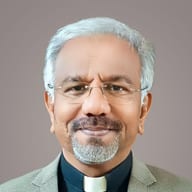
Revd. Dr. D. J. Ajith Kumar

Theological Education: To make the church a learning Community

The Church is not merely a worshipping community; it is also a learning community. From the earliest days of God’s people, faith has been nurtured through teaching, learning, reflection, and obedience. Throughout…

Key verse

But as for what was sown on good soil, this is the one who hears the word and understands it, who indeed bears fruit and yields, in one case a hundredfold, in another sixty, and in another thirty. (Matt. 13:23)

Readings

Psalm 1

The Church is not merely a worshipping community; it is also a learning community. From the earliest days of God’s people, faith has been nurtured through teaching, learning, reflection, and obedience. Throughout the Bible, we find God calling His people not only to worship Him but also to know Him. Ignorance of God and His Word often leads to spiritual weakness, confusion, and unfaithfulness, while knowledge of God produces wisdom, maturity, discernment, and fruitful discipleship. Theological Education Sunday reminds us of the importance of learning in the life of the Church. When we hear the term “theological education,” we often think only of seminaries, theological colleges, professors, or clergy training. While these institutions are important, theological education is much broader. It is the lifelong process through which believers grow in the knowledge of God, understand the Scriptures, deepen their faith, and learn to live as disciples of Jesus Christ. Every congregation is called to be a learning community. Every Christian is called to be a learner. In fact, the word “disciple” means a learner, a student, one who follows and learns from a teacher. Therefore, theological education is not the responsibility of theological institutions alone; it is the calling of the entire Church. The readings appointed for today reveal God’s desire that His people become a community shaped by His Word. They show us that learning God’s truth leads to worship, wisdom, maturity, and fruitfulness. Let us reflect upon this theme through four lessons from the Scriptures.
  1. A Learning Community Hungers for the Word of God (Neh. 8:1–12)

The first lesson takes us to one of the most remarkable scenes of spiritual renewal in the Old Testament. After returning from exile and rebuilding the walls of Jerusalem, the people gathered together in the square before the Water Gate. They requested Ezra the priest to bring the Book of the Law and read it publicly. What is striking is that the people themselves desired to hear God’s Word. They stood attentively from morning until midday. Men, women, and children listened carefully. Ezra read the Scriptures, and the Levites explained their meaning so that the people could understand. This passage demonstrates that true spiritual renewal begins with a renewed hunger for God’s Word. The rebuilding of Jerusalem’s walls was important, but rebuilding the people’s relationship with God was even more important. The people recognized that they needed instruction, understanding, and guidance from God’s Word. Theological education begins with this same desire. A church that stops learning eventually stops growing. Congregations may have beautiful buildings, impressive programs, and active ministries, but without a deep engagement with Scripture, spiritual vitality gradually declines. Notice also that the Levites interpreted the Scriptures for the people. Reading alone was not sufficient; understanding was necessary. This is one of the central purposes of theological education. It helps God’s people understand the meaning of Scripture, interpret it faithfully, and apply it wisely. When the people understood God’s Word, they first wept in repentance and then rejoiced in God’s grace. Learning led to transformation. A learning community is therefore a community that gathers around God’s Word with humility, eagerness, and openness.
  1. A Learning Community Delights in God’s Instruction (Psalm 1)

Psalm 1 describes two ways of living: the way of the righteous and the way of the wicked. The distinguishing mark of the righteous person is found in these words: “His delight is in the law of the Lord, and on his law he meditates day and night.” The psalmist teaches that spiritual growth is not achieved through occasional exposure to God’s Word but through continual meditation upon it. The righteous person delights in God’s instruction and allows it to shape every aspect of life. Theological education is not merely the accumulation of information. It is not simply about obtaining degrees, certificates, or academic knowledge. True theological education forms character, shapes values, and transforms lives. Psalm 1 compares the person rooted in God’s Word to a tree planted by streams of water. Such a tree remains fruitful, stable, and resilient even in difficult seasons. In many parts of the world today, Christians face a flood of competing voices and ideologies. Social media, political movements, consumer culture, and secular philosophies constantly seek to influence our thinking. Unless believers are grounded in God’s truth, they can easily become spiritually confused. The Church therefore must intentionally cultivate a culture of learning. Bible study groups, Sunday schools, theological colleges, lay training programs, youth fellowships, and discipleship ministries all contribute to this process. A church that delights in God’s Word becomes spiritually strong. Its members develop discernment, wisdom, and maturity. Like the tree planted by streams of water, they remain fruitful in every season.

III. A Learning Community Grows Toward Spiritual Maturity(1 Cor. 14:20–23)

In his letter to the Corinthians, Paul addresses a church rich in spiritual gifts but often lacking in spiritual maturity. Therefore, he exhorts them:“Brothers and sisters, do not be children in your thinking; rather, be infants in evil, but in thinking be adults.”Paul’s concern is that believers should grow beyond spiritual immaturity. Faith is not meant to remain at a childish level. Christians are called to develop mature understanding and sound judgment.This principle lies at the heart of theological education. The purpose of learning is not merely to increase knowledge but to foster maturity.A mature Christian is able to:
  • Distinguish truth from error.

  • Interpret Scripture responsibly.

  • Respond wisely to challenges.

  • Engage thoughtfully with society.

  • Give a reason for the hope that is within them.

Throughout Church history, theological education has protected the Church from false teaching and helped believers articulate their faith in changing contexts.In today’s world, Christians encounter complex questions concerning ethics, science, technology, interfaith relationships, social justice, ecology, and public life. Superficial faith is often unable to address these challenges. The Church needs informed and thoughtful disciples who can engage the world faithfully.Theological education equips clergy and laity alike to serve effectively. It nurtures leaders, strengthens congregations, and prepares believers for ministry and mission.A learning community therefore does not remain stagnant. It continually seeks deeper understanding and greater maturity in Christ.
  1. A Learning Community Bears Fruit Through Understanding(Matt. 13:16–23)

In the Gospel reading, Jesus explains the Parable of the Sower. He describes different responses to the Word of God. Some hear but do not understand. Others receive the Word with enthusiasm but fall away when difficulties arise. Still others allow worldly concerns to choke spiritual growth.Finally, Jesus speaks of the good soil:“This is the one who hears the word and understands it, who indeed bears fruit.”The emphasis here is significant. Fruitfulness is linked not merely to hearing the Word but to understanding it.Many people hear sermons every week, attend worship services regularly, and read Scripture occasionally. Yet hearing alone is not enough. God’s Word must penetrate the heart, shape the mind, and transform the life.Theological education helps create good soil. It enables believers to understand Scripture more deeply and apply it more faithfully.When understanding grows, fruit follows:
  • Personal holiness increases.

  • Faith becomes stronger.

  • Service becomes more effective.

  • Mission becomes more fruitful.

  • Communities become more Christ-like.

Jesus speaks of fruit yielding thirty, sixty, and even one hundredfold. The impact of a learning community extends far beyond itself. Educated and equipped believers become teachers, evangelists, leaders, counsellors, and witnesses in society.Every theological institution exists ultimately for this purpose: not merely to produce graduates but to help the Church bear fruit for God’s Kingdom.Every congregation should therefore ask: Are we creating opportunities for learning? Are we nurturing disciples who understand God’s Word? Are we preparing future leaders for the Church?A learning church becomes a fruitful church.

Conclusion

Theological Education Sunday reminds us that the Church is called to be both a worshipping and a learning community. The people gathered around Ezra hungered for God’s Word. The psalmist delighted in God’s instruction. Paul urged believers to grow toward maturity. Jesus taught that understanding God’s Word produces abundant fruit.These four lessons reveal God’s vision for His Church.A learning community:
  • Hungers for God’s Word.

  • Delights in God’s instruction.

  • Grows toward spiritual maturity.

  • Bears fruit through understanding.

The future of the Church depends not only upon passionate worship but also upon faithful learning. We need congregations that study Scripture seriously, leaders who are well-trained, and disciples who are rooted in truth.On this Theological Education Sunday, let us pray for our seminaries, theological colleges, Bible schools, teachers, professors, students, pastors, catechists, and lay leaders. Let us support theological education as a vital ministry of the Church.Above all, let us commit ourselves to lifelong learning in the school of Christ. For every disciple is a learner, and every church is called to become a learning community.May God grant us minds eager to learn, hearts willing to obey, and lives that bear abundant fruit for His glory. Amen.  
← Sermons Download PDF Share